
Yani X interviewed by Lauren Petersen
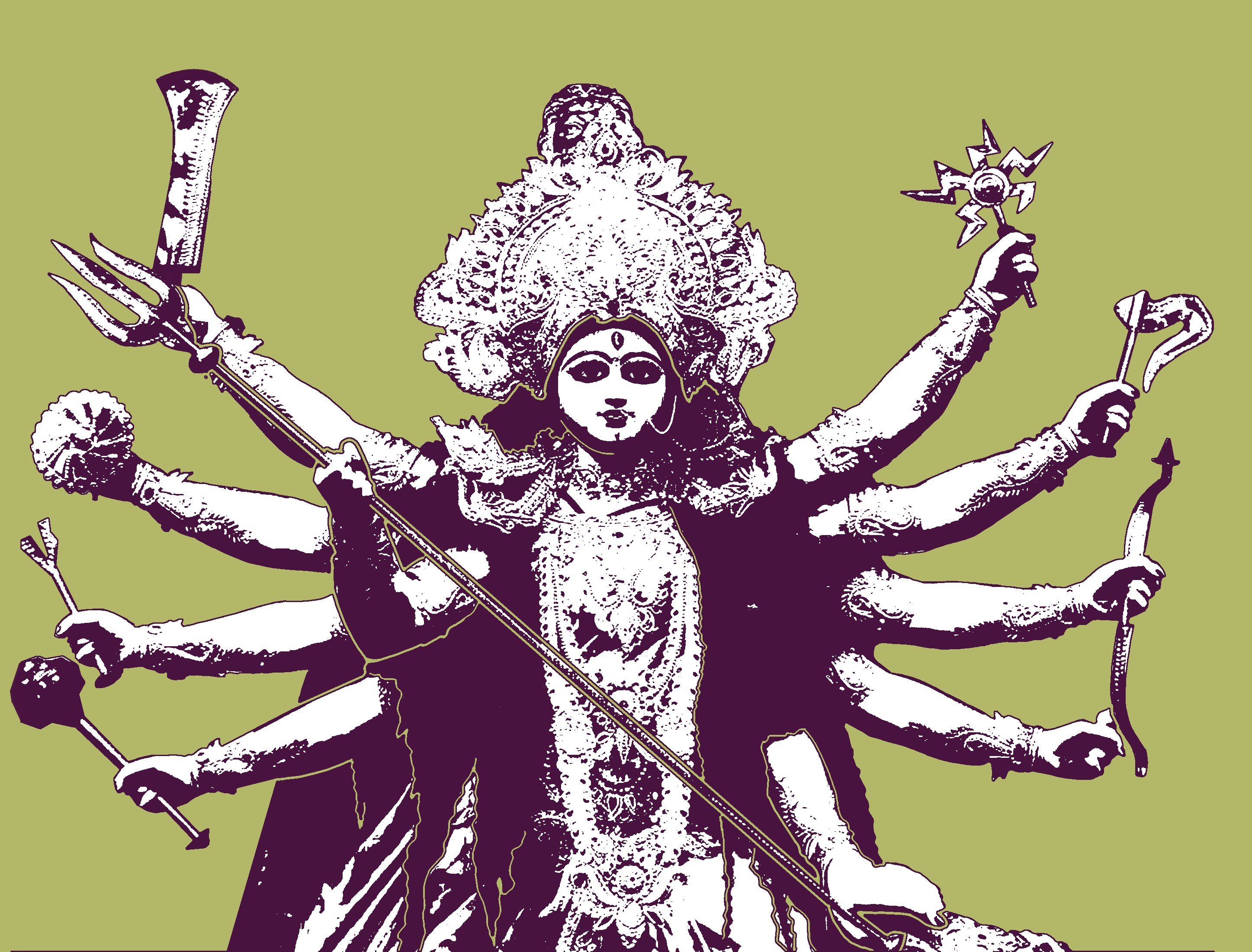
Graphic edited by Faith Freshwater
This piece was originally published in ‘Vestige’, Bossy’s 2023 print edition.
‘Who am I? I’m Yani, in public at least’.
This was the answer of ‘who are you?’.
Yani and I sat at my vanity once she arrived at my home. She had suggested we have this interview while we do our makeup together because it felt so appropriate, as we met while we worked at a beauty store.
‘My hobbies…I mean…a lot of my hobbies are hanging out with my husband’. She enjoys making music, both as a rapper and a producer. At the time, she also helped run The Food Co-op Shop outside ANU.
‘I just sort of like entertaining. I like, I like when people have a good time’.
We spoke about her childhood. She spoke about her Bengali background with such an eloquent, educated sense about Bengali history, culture, class and complexities. Though she had both a clear admiration and critical take on these things, she did not view herself as Bengali.
‘There have been times that I have tried very hard to not be [disconnected], because I did feel like there was something important about it. But, I couldn’t…’.
We discussed first-generation immigrant families. How they can often carry nationalist ideals and unforgiving judgements of others, including of others whom they would consider similar or same.
‘I hated this fear of people that are different from me…that drove me away for a long time. I had a lot of main character energy for a few years… I had a lot of ideas that there was some kind of meaning and purpose for my life specifically…I tried my best to feel a connection’.
When I asked if there was a sadness of any kind associated with the disconnection from her culture, Yani said she did not.
This, to me, was an unexpected response. Though my family has no memoir of when they immigrated to Australia, I still feel a loss. I had expected that someone such as Yani, who had a closer connection to her culture, would have had a more severe suffering from that. Indeed, it is a common theme for immigrant families, whether first, second, or much further down the line, to feel a pain from disconnection. But Yani viewed it differently.
‘It was a freedom for me. It was when I really started living in the moment…part of that journey was really hated where I was from, and that’s not really it as well’.
We talked about what we named ‘alleged culture’: what people claim is a cultural practice but is really a thinly veiled attempt to disguise their own personal beliefs about others.
Such beliefs being based on the mental short-cuts of stereotyping. This ugly side of cultural pride was why Yani felt disconnected from her Bengali blood; why she sees herself as separate from it.
‘The place I came to that I think was healthiest was that…that’s just what happened…and if I learn things about [my background] that’s neat, but broadly speaking, it is, and I can’t run from it and that’s part of the story. You know, time passes.’
‘Being a trans woman, I feel like it gave me a connection because there is such a long history of people like me in India…is there some kind of tradition I see my part apart of, it is like the tradition of Hijra people’. While Yani clarified that she knows she is not a Hijra person, there is still a part of her that identifies with it.
‘I felt like part of the connection, learning how Hijra see them see themselves as people…written as entertainers. You know. That’s what I feel like. I like to entertain. And part of that is colours, and bright colours on my face, and pretty clothes and so on.’.
Yani displays this bright and colourful exterior she describes. Her makeup is eclectic and bright, featuring bold brush strokes. She wears her jewellery on her left side of her body, keeping the right side bare, like a walking art statement. The aura she emanates is of a bright, cheerful, intelligent, inviting woman. Her connection to the Hijra is not like her connection, or disconnection, to Bengali culture: it is beyond blood and the skin deep, it is a connection of the mind and the person.
‘And like, having a sexual energy. Being open about that…before I came out, and when like I had more traditional ideas…like that (Hijra people) pulled a lot of things together for me’.
This is not to say Yani has completely removed herself from Bengali culture. She has not cut herself from it. She is still tethered to it. She speaks Bengali and she mostly cooks Bengali cuisine. She has a tattoo of Durga, a Hindu goddess who is described by Wikipedia as ‘associated with protection, strength, motherhood, destruction, and wars.
‘To me she represents feminine strength, and she represents the triumphs of like, good. She has ten weapons; she has ten arms’.
But this tattoo is one she designed herself. She commands her connection with her culture, not letting it command her.
‘Coming out, definitely, I don’t know if allowed me to reconnect with my culture, I think it allowed me to reconcile it’
This disconnection from her Bengali background does not weaken Yani, it empowers her. She is not bound by it.
‘I don’t exist in Bengal. I exist here’.
But there is a peace about her when she speaks about this. There is no hint of resentment or of hypothetical ‘what-ifs’; there is an acceptance of what is.
‘I do not feel my ancestors…what are they gonna do, and also what do we know about what they thought…and what they would think if they were raised now. Inevitably, it has to be a reflection of where I grew up. I guess I don’t believe much in the soul. I believe in the self.’
So, who is Yani outside of what we would consider identifying traits, like ethnicity and gender. Of course, she’s a musician, a cook, and an eclectic makeup artists. But, how does Yani see Yani?
‘I just like when people like themselves. And when, speaking to someone, you know, I can help them like themselves that day. And that’s what makes me feel the most existent, the most connected to people…making people laugh and be happy, having a little bit of less shame’.
So, when I asked her again, ‘who are you?’, she answered:
‘I’m a bit of a laugh…I think that’s it’.




Leave a Reply