

Written by Imogen McDonald
Graphic by Hengjia Liu
This piece was originally published in ‘Memento Mori’, Bossy’s 2021 print edition.
You don’t belong to yourself. Not really.
Let’s say you’re awake for 17 hours, you probably belong to yourself for about 12 per cent of the day. Two hours. So, who do you belong to for the other 15?
Well…
You belong to the annual $650.1 billion of unpaid care work in Australia. You belong to the annual $132 billion of unpaid domestic labour in Australia. You belong to a $25,000 HELP debt you can only dream of paying off one day. You belong to your $500,000 mortgage for a crumbling house in the suburbs. You belong to the cries of your irritating children. You belong to the photoshopped goddesses on your Instagram feed who try to convince you to try that ‘magic
Diet’.
Finally, you belong to your bed, in which you can recharge your energy just in time to redistribute it to everyone and everything else all over again, the next day. And what do we do with the two hours we own, you ask? How do we spend these tiny slithers of freedom, before we doze into the inevitable time portal that is sleep? We scroll and read and think and dream — and we cut further and further into our sleep. These sacrificial winks of time seem better than the alternative: entering the void that leads us to inevitable responsibility.
We can sleep when we’re dead, right? In fact, the word ‘bed’ appropriately originates from the Proto-Germanic term badja, meaning grave. We’ll continue to live like this until one day we’re lowered down into our eternal beds, where maybe we can finally get some rest. Sleep is fast becoming a necessity that we are more and more reluctant to embrace. Are beds becoming a 21st century waste of space?
Derived from the Chinese expression 報 復性熬夜, or ‘bàofùxìng áoyè’, ‘revenge bedtime procrastination’ was a term first popularised on Twitter by journalist Daphne K Lee, and is now probably infiltrating your TikTok For-You page. Lee describes it as “A phenomenon in which people who don’t have much control over their daytime life refuse to sleep early in order to regain some sense of freedom during late night hours.” Without a doubt, this ‘revenge bedtime procrastination’ or ‘sleep procrastination’ is becoming a universal experience in the perpetual race to ‘success’ that is the 21st century. Although extreme productivity isn’t exactly deemed negative or toxic in today’s world, a lack of sleep has adverse impacts on our mood, memory, and physical health. Australia’s work culture certainly affords a relative level of freedom in comparison to the strict employment regulations of other countries. Nevertheless, the revenge sleep phenomenon is gripping our lives at a rapid rate. This is not surprising, considering that half of the Australian population is working without pay, on top of paid work.
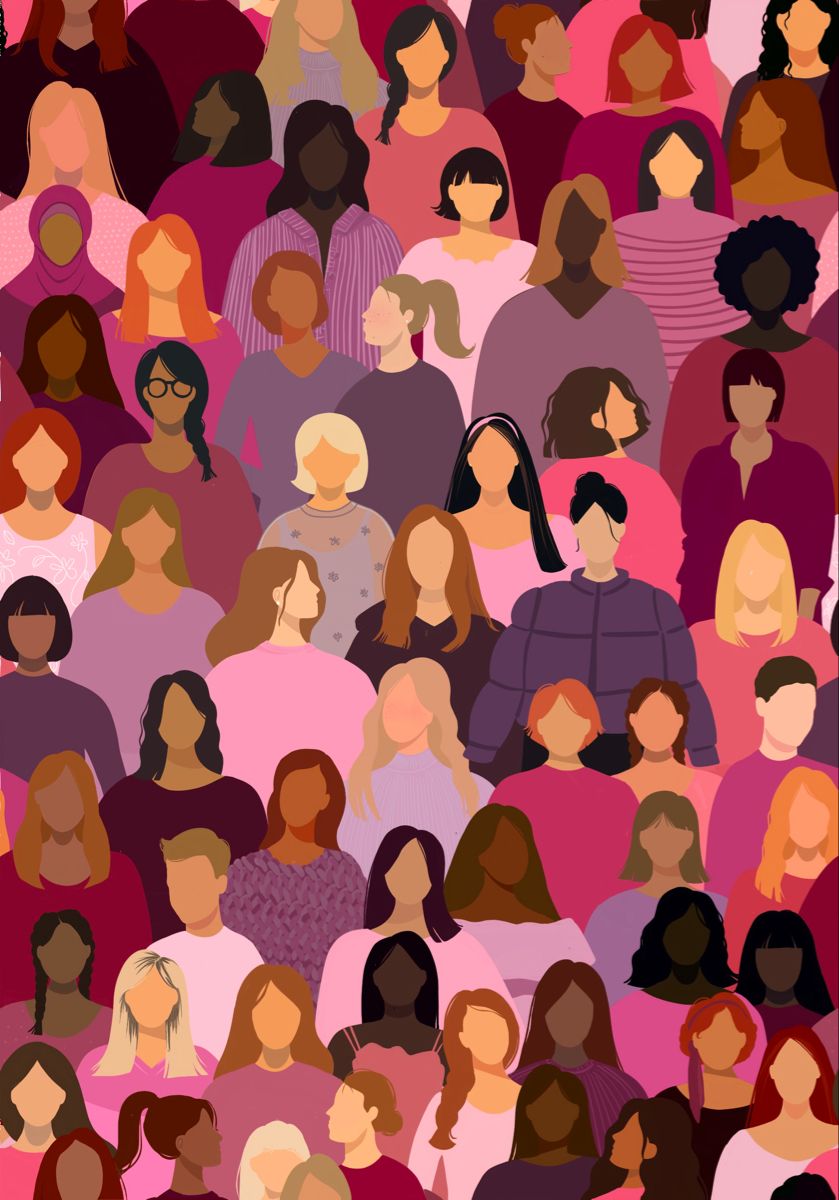
Now, remember that $650.1 billion of unpaid care work and $132 billion of unpaid domestic labour I mentioned earlier? The labour that is gripping you by the hair and dragging you back from the fantasy that is your free time? Statistically, this unpaid work is much more likely to be done by women. Every week, Australian women complete approximately 13.1 more hours of unpaid labour than men, totaling a mighty 681 additional hours per year. The largest sector of Australia’s economy is unpaid childcare, which is three times the size of the financial and insurance services industry, according to 2017 data. Yet again, women carry out twice as much of this unpaid childcare.
The repercussions and emotional toll of this work are summarised in a piece by author Gemma Hartley for Harper’s Bazaar: “I find myself worrying about how the mental load bore almost exclusively by women translates into a deep gender inequality that is hard to shake on the personal level.” Our days are spent slicing up food for our children, for our elderly parents and grandparents.
Nights are spent slicing into sleep, as we attempt to obtain a slither of time to ourselves. The scrutiny women face in keeping the environments of themselves and those around them clean is so excessive that it turns inwards. It seeps onto our skin, sails through our blood, and stains our minds. We become engrossed in keeping our legs cleanly shaven, our faces bare of any wrinkles, spots, or hairs, our teeth gleaming white. Clean. Tidy. Neat. Some may say this is ‘self-care’; that this is time spent when we do belong to ourselves — we are doing all of this for ourselves, aren’t we? Ask yourself if you would still do it all if you moved through life as a ghost. Like I told you at the beginning, you are at the mercy of the enigmas who live in your Instagram feed.
Whilst you may feel like you indeed belong to the cries of your irritating children, can the requirements of childcare somehow be turned into a positive tool, reducing the insidiousness of the revenge sleep phenomenon? Ironically, the answer is yes — some companies have already made the switch to a four-day working week after conversing with experts in the field: working mums. The deadlines and responsibilities that parents have mean that they are completing a week’s worth of work in four days. School pick-up runs and childcare necessitate a strict time management framework — a framework that companies are beginning to examine in order to transition to a four- day working week. The convention of the five-day working week has become unrealistic and unfair, considering that technological advancements have meant that the amount of work people take on after hours from their laptops at home often equates to a few extra days’ work, anyway. A shortened working week results in increased staff retention, minimised sick leave, higher levels of productivity and work satisfaction, and, most importantly, allows time for people to belong to themselves.
Perhaps, you are lucky enough not to have these responsibilities pressing you to engage in the revenge sleep phenomenon. But you can’t get away that fast. Look behind you, and you will find the $25,000 HELP debt I mentioned before, following you around. Actually, it isn’t just following you. It is chasing you into the nighttime, and leaving you with a few sacrificial hours to catch your breath and relax. For many students, the glow of the night is devoid of judgement, responsibility, and guilt. The epidemic swallowing our generation is the need to constantly be ‘doing’; during the minute break times deemed acceptable, you shouldn’t just be relaxing, but relaxing productively. Watching the latest documentary, playing a sport, learning French on Duolingo. When will we be able to spend a few hours sitting on a bench in a park, thinking of absolutely nothing useful or constructive?
With all things considered, it is no wonder we don’t feel like we belong to ourselves anymore. It is no wonder that we cling to morsels of time during which we can finally manage to sit with ourselves in peace. To have a conversation with ourselves. To enjoy ourselves. This article has basically defined you as a puppet with your arms controlled by your children, your head bopping around attached to the superficial pressures of your Instagram feed, and your legs moving by the strings of your study commitments. But you do not have to keep relying on the nighttime to cut the strings of your various puppeteers. As a result of increased social consciousness and mental health awareness, aided by the occasionally useful vessel of TikTok, we are beginning to question why we are having to sacrifice our sleep to feel a sense of peace. Discussions are sparking action within various companies, and the concept of genuine self-care, including having time to oneself, is embedding its roots in both education and our everyday vocabulary. The tables are slowly turning, on the way to defeating the revenge sleep phenomenon. Or should I say, the beds are turning? So, hop right in under the covers, and get some sleep instead of reading this article at 2am!


Leave a Reply