
Written by Arushi Ganguly
Graphic by Sabrina Tse
CW: Description of sexual and wartime violence, mention of emotional trauma.
This piece was originally published in ‘Memento Mori’, Bossy’s 2021 print edition.
When I started studying women within the context of international politics, it never occurred to me that I may become affected by vicarious trauma.
Early last month, I reached out to ANU Counselling after noticing a number of changes in my everyday interactions. At the end of my first session, the counsellor informed me that I may be experiencing vicarious trauma. Having never heard the term before, I decided to do some reading. Preliminary research revealed that vicarious trauma is commonly associated with first responders and mental healthcare providers, but we have a limited understanding of how it affects students and scholars.
“But does it really matter?”
This question, or its likeness, is one of the first I’m asked when people find out I intend to specialise in feminist international relations. International relations, or any other academic field that studies politics at an international level, is assumed to be a subject of grand proportions, one that need not concern itself with something as trivial as gender studies. People often assume that scholars of international relations only study the behaviour of states at an international level. While this is generally true, one must not overlook the people that make up the state, and, consequently, play a major role in state policy. Although feminist theories have made valuable contributions to the field of social science, the study of women within international politics is still largely insufficient. Traditionally, security studies was seen as a ‘masculine’ field. Conversations about war, diplomacy, and state politics were usually reserved for men, and are still dominated by men today. In the 1990s, as critical theories became more pronounced in social sciences, Cynthia Enloe asked: “Where are the women?”— opening the floodgates for academic research focused on women in politics. Enloe questioned the hitherto male-driven and male-focused analysis in the study of international relations. Her work influenced many other women to conduct rigorous research, who then began filling the gendered vacuum within the field. I’m pleased that today, women are studied as policymakers, citizens, bystanders, voters, economic participants, victims of war, perpetrators of crime, and in numerous other fascinating roles. Yet, the field of international relations remains largely clouded by the male narrative.
Until my master’s, I was unaware of the existence of feminist research in the field of international relations. Still, during the three semesters I’ve studied at the ANU, the experiences of women have been taught as an afterthought. I’ve realised that women are often only studied as a subject of inquiry for one session in the whole 12 weeks of a semester. Coming from a country where I was never taught about women, I’m grateful for these admittedly sparse women-centric sessions. Yet I do wonder if this is done simply to tick a box. Surely, as a national research university, professors can revise a course such that marginalised identities are investigated each week in congruence with the topic, rather than trying to fit such complex issues within a single week.
The bits and crumbs of feminism offered to me became my fixation, and by the end of my first semester, I knew I wanted to specialise in feminist international relations. I met wonderful professors in the department who suggested authors and research articles, and lent me their books so I could study what I wanted. Soon, I had my eyes set on a thesis analysing women in conflict, and used every assignment to practice, incorporating feminist perspectives in all my essays. But the level of pain I’ve felt upon reading certain accounts of women in conflict was unexpected.
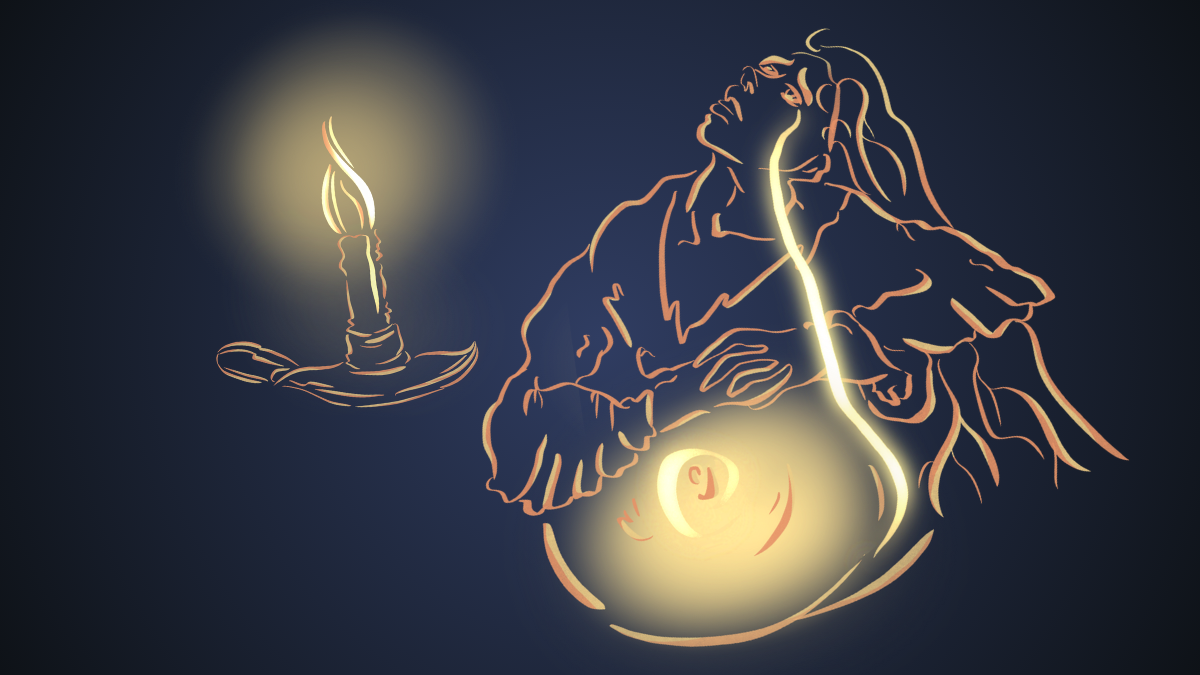
For me, continuing in this direction of study now requires a degree of consideration about how to best manage my own mental health when delving into analysis of other women’s experiences. In writing my thesis, I plan to establish a comparative analysis of instances of Genocidal Rape. To situate myself, I’ve read survivor testimonies of Bosnian, Rwandan, Bangladeshi, Yazidi, and Rohingya women. I’ve read up extensively on the various ways women are affected by conflict. This has included research about comfort women, communal rape, and forced marriage. I would sometimes spend more than eight hours a day reading harrowing details of some of the worst brutalities of war. In one instance, after researching forced marriages under the Khmer Rouge, I had nightmares about my own parents dragging me away from my little sharehouse in Canberra to be married to a faceless mirage of a man in India. I woke up disoriented, and felt uncomfortable speaking to my mother throughout the week. Another time, after reading about Bosnian rape camps, I had to call in sick to work. My biggest concern arose when readings began impacting the way I interacted with people in everyday scenarios. My scholarly pursuit has begun affecting the way that I interact with men on dates. I could be sitting next to a lovely man, but all I can think of are the statistics of intimate partner violence.
I’m sure any political science student can attest that when people learn about your field of study, it is taken as an invitation to give their unsolicited political opinions. Every time I tell someone I’m interested in understanding women within the context of international politics, they assume I’m inviting them to inform me that “not all men” commit the aforementioned atrocities, and that even if they did, “everyone deserves a second chance.” Once, I would have responded impassively. Now, knowing what I know and having studied sexual violence in war, I cannot seem to control my disdain for such uninformed opinions. I cannot seem to ignore such blithe disregard of women’s issues.
Given my visceral and bodily responses to the content of my study, I decided to consult with a therapist. When I opened up about vicarious trauma with my therapist, the first thing they asked me was whether I could change my area of interest — since the one I’d chosen was clearly impacting me mentally. I was firm in my refusal. While it’s true that reading witness and survivor accounts can be taxing on my mental health, I’ve made the personal decision that the accounts of these women are also a priority, and need to be given centre stage. In making such a decision, I have also recognised my privileged position: I read these harrowing accounts from the comfort of my room, using technology and resources many people don’t have access to. I have supportive professors and parents, who have been my rock through my many emotional upheavals. I can afford to see a therapist, and have access to specialised healthcare, if needed.
More importantly, I’m now aware of what my own subject area lacks. I have spent years learning political theories written by men for men. I have learnt plenty about the glorious inevitability of war, but not nearly enough about the devastating impact of said war. I have been in classrooms where my peers discussed the necessity of foreign intervention, and the need to ‘liberate’ people. I find that they are all too comfortable with branding civilian casualties as inevitable costs of war, and are disinterested in learning about sexual violence in conflicts. The apathy of others does not mean that such problems are issues we need not confront. Feminist thinkers have made valuable contributions in the understanding of how post-conflict reconstruction should be organised, and have shone light on issues often disregarded by international organisations. Today, laws against sexual violence in war are strong where they were once vague and inconsistent. For me to walk away from this area of study would be the biggest betrayal I could take against myself. I come from a country where gendered violence is prevalent. Eighty-eight sexual assault allegations are reported to law enforcement every day in India. This is just a fraction of the actual number, where many women are withheld from reporting cases due to societal stigma. I believe that with my education, my privilege, and my resources, to not speak about the women on whose shoulders I stand today would be reprehensible.
With help from my therapist, I have found ways to cope. I meditate regularly, and I started doing my readings early in the day, rather than later in the evening, so that I don’t carry my thoughts to bed. I also force myself to stop reading when I realise the content is too excruciating for me to absorb. I go out and take long walks before resuming such work again. This does not always go perfectly to plan. I still sometimes spend days spiraling in my own thoughts. I still have nightmares, though fewer and far between. I firmly believe that through regular consultations with my therapist, I can overcome these issues, or at least mitigate them. I will continue studying feminist literature and research, so long as it continues invigorating me. And hopefully someday, I can use my education to help someone.


Leave a Reply