

Written by E.J. Murry
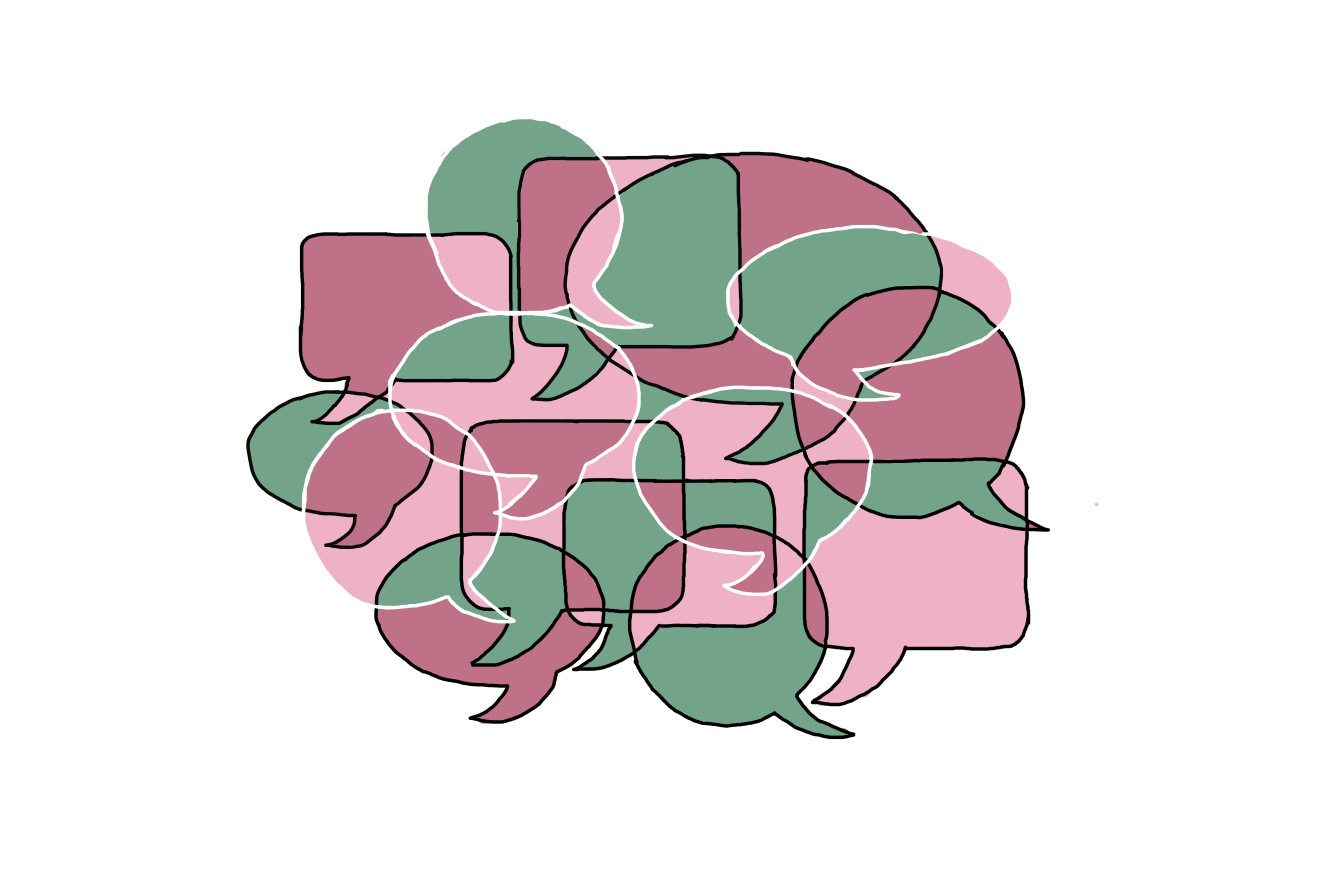
Illustration by Faith Freshwater
This piece was originally published in ‘Vestige’, Bossy’s 2023 print edition.
CW: Discussions of period-typical misogyny.
“I am no bird, and no net ensnares me.”
(Bronte, p. 303)
These are the words of Charlotte Bronte’s Jane Eyre, as she asserts her independence in what would become one of the most iconic quotes in feminist literature (feminist literature in this case being literature that concerns the social, cultural and political goals and experiences of feminism). Internally passionate, strong-willed, and opinionated but externally repressed Jane is looked to as an early example of a feminist character. She learns to choose her own desires over those both of society and of the people around her by searching for environments in which she is treated as an equal. Jane struggles with the choice between community and independence, learning how to balance both, by leaving situations that do not speak to her values and her heart and finding those that do.
Jane Eyre was one of my earliest exposures to “feminist” literature. I read it when I was around 14 years old, and I remember being touched by Jane’s struggle to assert herself in a world that forced her to repress her opinions and desires. I identified with her self-aware, internal monologue, in a way that I hadn’t experienced in the other classics that I had read, most of which were written by and centred around men. I felt so personally connected to Jane’s struggle because I had felt the same frustration that she learns to overcome: how to find community without losing independence, and how to be honest without alienating myself from the people around me.
But when I revisited Jane Eyre at eighteen years old, my experience was different. I noticed far more acutely the novel’s heteronormative, and often heterosexist, tone. Rochester is misogynistic; he treats Jane like a child, and this is largely supposed to be viewed by the reader as romantic. When Jane finds the strength to tell Rochester that she is going to leave him, he responds by both infantilising and disparaging her:
“Jane my little darling (so I will call you, for so you are), you don’t know what you are talking about; you misjudge me again: it is not because she is mad I hate her. If you were mad, do you think I should hate you?”
“I do indeed, sir.”
“Then you are mistaken, and you know nothing about me, and nothing about the sort of love of which I am capable.”
(Bronte, pp. 265-266)
Rochester’s belittling tone belies the fact that he does not take Jane seriously; he sweeps away the validity of her concerns, and when he is not successful in doing so, he responds with the intention of hurting her and making her question her judgement. Jane leaves Rochester, but the narrative never forces Rochester to atone for his actions. Instead, it is Jane’s forgiveness that brings her back to him. This forces Jane to reckon with his actions, rather than Rochester to take responsibility.
Rereading this novel as a non–binary lesbian, I struggled to find redeemable qualities in him, and I struggled to identify with or relate to the fact that Jane, even in her struggle for independence, lives a male-centred life. It made me feel as if I’d lost something—the ignorance to enjoy Jane’s story without feeling alienated from it. I had lost the community, in a way, of feeling connected to this book that I had loved in the same way I had loved it at 14.
In many places, I still personally identified with Jane’s experiences and struggles just as I did at 14. There is no denying that there is universality in the themes of Jane Eyre, which makes it difficult to make a conclusive judgement about my relationship to it; it is both alienating and deeply personal. This raises the important question of the interconnection between the personal and the political.
As I have grown into my identity, there has been increasing conflict in my mind. How can I enjoy literature that reflects the experiences of womanhood but also fundamentally centres men and espouses unquestioningly patriarchal values? It’s not just that I’m ideologically opposed to those ideas—in fact, I think that it is a deeply beneficial thing to read texts to understand them from a historical standpoint. It’s about my personal relationships with characters, and how they impact my view of myself.
I have a tendency to hold myself to the standards of the characters with whom I personally identify, and this, for a long time, included the standard of idealised womanhood. Reading books by authors like Sylvia Plath, Jane Austen, Charlotte Bronte, and other classic female authors, was beneficial in forming my understanding of myself in many ways, but it also taught me that the kind of woman I wanted to be was a certain kind of woman: intelligent, but feminine; emotional, but restrained; independent, but appealing to men. Especially appealing to men. I wanted to be Jane; I wanted strength, but only if I could eventually experience male approval for this strength. The omnipresence of the male gaze and, by extension, the compulsory heterosexuality enforced by much media aimed at women, prevented me from understanding that I was a lesbian until I was in my late teens. After all, for whom was I to perform these qualities if not for men? How could I compensate for my intelligence, my anger, my sadness, my independence, unless I was still appealing to patriarchal validation at the same time?
Patriarchy teaches women and woman-socialised people to turn their anger, often a result of their societal oppression, inwards; self-hatred is ‘more beautiful’ than hatred of the world. This idea can be seen in societal responses to media that concerns female anger. In terms of contemporary popular examples of this, My Year of Rest and Relaxation by Ottessa Moshfegh, or Phoebe Waller-Bridge’s play-turned-TV-series Fleabag come to mind. These pieces of media directly criticise the tendency of women to turn their anger and pain inwards, and yet the societal response to them is often to romanticise the protagonists’ behaviour. Even when literature criticises how we are taught to deal with our anger at the world, we respond by romanticising the turn inward; how, then, can we reckon in a critical way with the literature that presents this notion without question?
***
I don’t feel as if there is a clear answer to this question. I still reread and love books that hold problematic beliefs of the time periods in which they were written, but now my love for them is uneasy. I don’t want this uneasiness to go away; it’s a mark of critical thought. Loving them unquestioningly would be a disservice to myself, a lack of acknowledgement of my identity, and a lack of allyship with the other communities that these books exclude and/or disparage.
An understanding of feminist literature must be diverse; we cannot afford to limit what we know as feminist literature to what is considered the Western canon, because there is not one singular feminist story. It is important to note that this article is limited to my personal experience of Jane Eyre; the novel is also rife with racism and ableism, which further prevent it from being a truly feminist novel. The intersections of race, class, gender, sexuality, religion, and ability, among many others, all shape our experiences of what feminism is, and so there cannot be one single perfect piece of feminist literature. To read feminist literature is to read a diversity of feminist voices, beyond white, heterosexual, cisgender women.
There isn’t a simple answer as to how to deal with finding connection through, and relating to, flawed pieces of feminist literature, but one thing we can do is read with an understanding that these characters that we have grown up loving don’t have to be characters that we reflect in our lives. Jane can teach me about what I used to want, and why I no longer want it. I can love her for connecting with me at 14, when I was still searching not only for literature that depicted my experiences, but for meaning in those experiences, for the first time. I can love her for what she has given me without loving her uncritically. If our feminism is to be intersectional, our reading must be critical.
References
Brontë, Charlotte, et al. Jane Eyre. Ware, Wordsworth Editions Limited, [Post, 2006.]



Leave a Reply