
Written by Maddie Chia
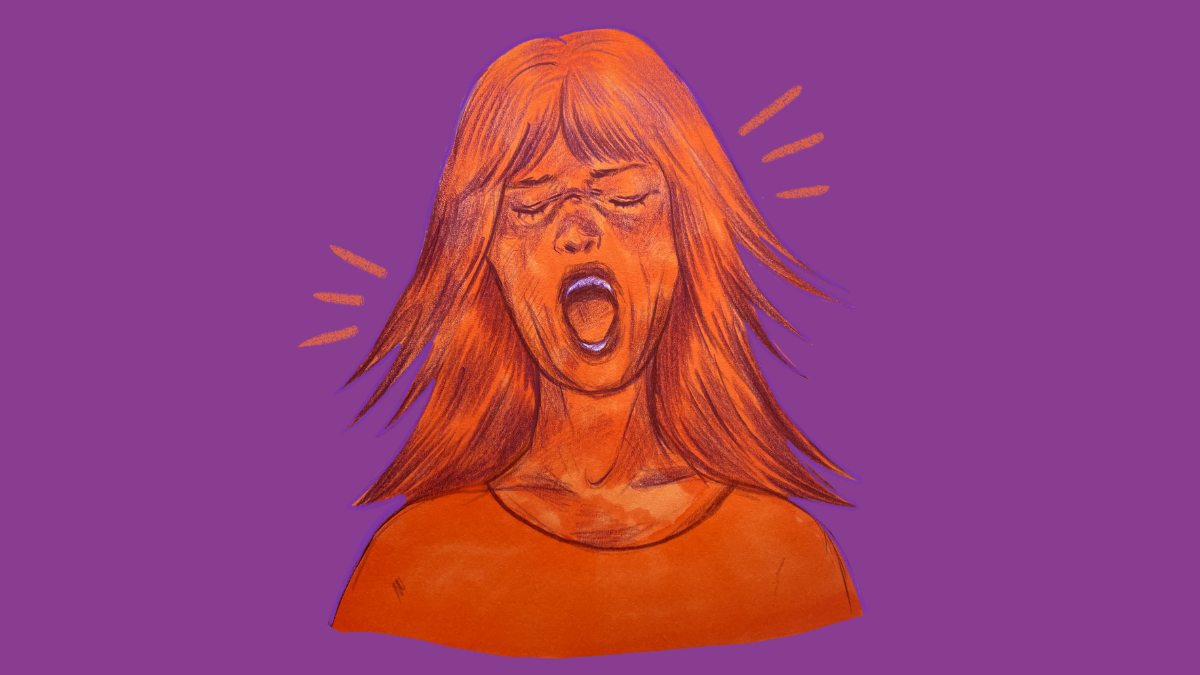
Graphic by Hengjia Liu
This piece was originally published in ‘Chimera’, Bossy’s 2022 print edition.
I’m really fucking angry.
This internal rage has been brewing for many years. How has feminism actually helped us if we still aren’t equal? Why is it still relevant if I don’t see myself represented by so-called “feminist” icons? What is the point of feminism?
The word “feminist” is tattooed on my arm. It’s been inked into my skin with a needle over and over again. It’s permanent. Forever. Some days, I regret having the word in such a visible location. Other days, it is one of my most prideful possessions, a constant reminder of my values—but there is always a voice at the back of my mind. Perhaps having this makes people see me differently. Am I forcing my view upon others? Sometimes I even forget it exists until it resurfaces when I’m in the shower or dependent on what I’m wearing—which in itself is a little ironic. Sometimes I feel like a hypocrite when I purposely cover it up with foundation or clothing for job interviews, or around certain people; in particular, the boys I choose to date.
Maybe I am unsure about my own feminism?
As my mother likes to phrase it, “Maddie, you’ve always been angry about something.” In a way, this is accurate. I have always been an angry girl, whether it was at boys hogging the handball court at lunch in primary school or men speaking over me in tutorials. Maybe my anger was misplaced. But my anger only turned to resentment when I began university and noticed the overwhelming prevalence of white feminism. It was too hard to not see. There was hardly anyone who looked like me in the mainstream feminist movement. I feel like I often fall into the common trap of saying that I hate men whenever I hear of inequality in the media; whenever yet another famous white feminist speaks of shameful behaviour. Instead, maybe I should really be saying that I hate the feminist status quo and everything it represents for women who look like myself: seen, but not heard.
I’ve been a feminist since I was a young girl. I grew up with a full-time working mother in the STEM field, and two incredibly strong grandmothers who worked themselves to the bone to provide food for my parents when they were young. I was taught to stand up for myself and speak up. I was lucky to have such strong feminist role models from the start, but this often got me into a lot of trouble as a young girl, and still does to this day—a young woman of colour speaking her mind is a foreign concept to many.
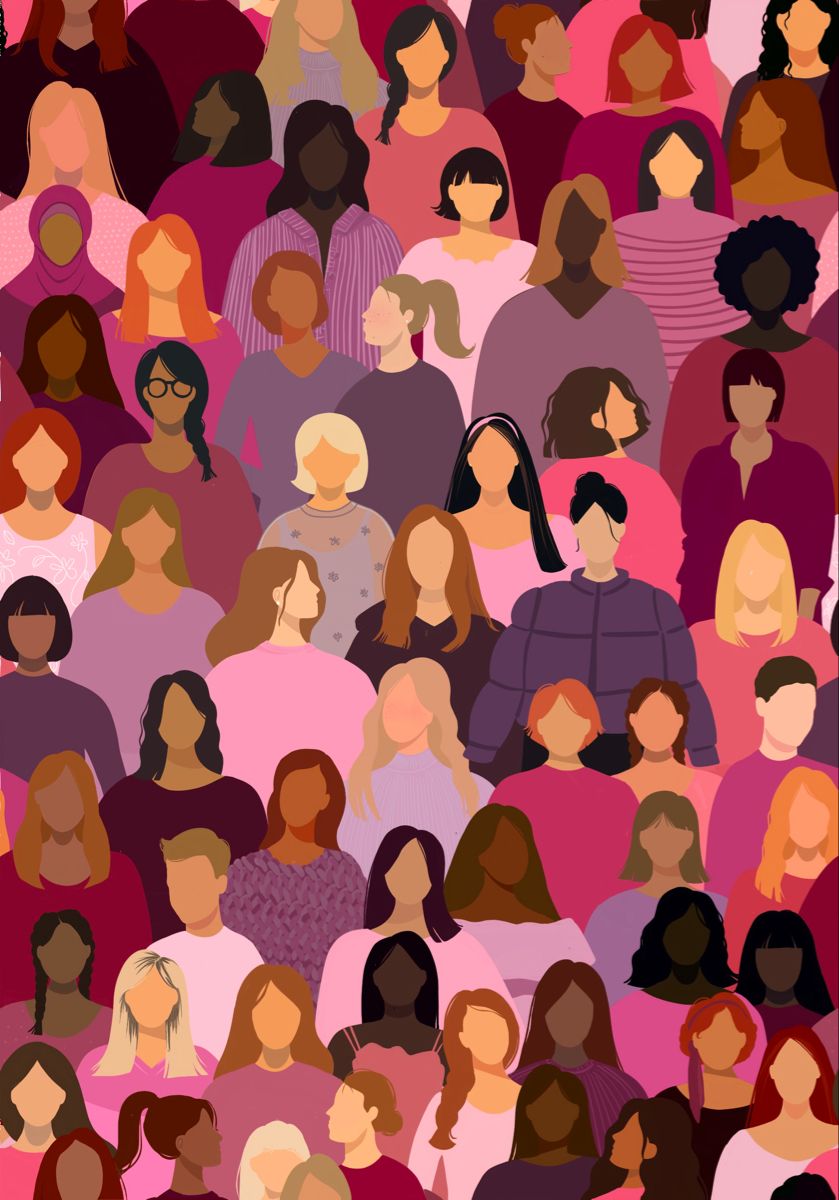
As someone who has always been fascinated by feminism and the power of women, I decided it was only the natural progression to study it at law school. When I did my readings, though, a common theme kept nagging at me: where were the diverse voices? At the moment, feminism feels like a “one size fits all” approach. Most academic writing about feminism is by white, upper-middle class women, and most of the people who we see speaking about the movement are also these women. The voices of BIPOC women are often hollow efforts to add a hint of “intersectionality”—or, as I like to call it, tokenism. The notions of “girl power” and “intersectionality” have always been thrown around in relation to “fourth-wave feminism”, which is apparently occurring at this exact moment. Collective rage from a new group of women. Intersectional women. But if we actually take a step back and reflect on the words intersectional and inclusive, I don’t believe these are represented in our current feminist movement. Intersectional means that all groups and experiences are represented.
Feminism as a concept has evolved in many ways over the years from the typical “white feminist” approach to a more diverse movement, although it is still far from perfect. Throughout history, women have been pitted against each other through the pressure of the male gaze—especially BIPOC women. We are fetishised. We are diminished to oriental objects. We are the token diversity pick. We will always have to work twice as hard.
Frequently in the pursuit of intersectionality, white women take charge and include BIPOC voices as an afterthought. I know for me, personally, it is often hard to have my voice heard in a room full of white feminists, as I don’t fit the mould of what is considered a “classic” feminist: I’m a petite woman of colour. I have had this experience countless times—not just in high school, but also at university. Take, for example, the 2021 Women’s March 4 Justice. This March was created by a white woman in response to a white woman in Parliament. This white woman then recruited more white women to lead the organisation of the March in every state around the country. During the Canberra March, we had a “celebrity” white woman MC, and several other “famous” white women were recruited to speak. The March had an occasional sprinkle of “diversity” and “token diversity”; ultimately, however, it was predominately a white feminist event. I was told by one of the organisers—a white woman—that she thought it would be a good idea for me to speak because Avan Daruwalla (the ANU’s Women’s Officer from 2021–present) and I brought a “special diverse touch” to the speaking list. Whenever we tried to suggest anything to make it more intersectional, we were met with a “hush girls, it’s fine the way it is” or deafening silence. Again—white women silencing BIPOC feminist voices. What’s the point of even trying? This was the biggest display of feminist rage of the year, and even though I was immensely proud, I felt like a token. I felt like a pawn. I didn’t feel strong; I didn’t feel like I represented anything. I was only there to make the event look more diverse and intersectional—because, of course, that’s “woke”, as the white organiser told me.
We need to do better to include BIPOC voices in our pursuit for every woman and non-binary person to feel included in the fight for equality. I understand and congratulate white women for their achievements toward furthering the feminist movement, but it is now time for them to take a step back and assume a supporting role. If we are truly to create a feminist movement reflective of society, then we need to centre BIPOC voices. Often, the emotional labour that we place on the chosen few “diversity picks” creates a high rate of burnout and resentment for taking up the role of silent grunt in the background. In order to avoid this, we need to start having tough conversations and genuinely championing the voices of those who don’t necessarily fit into the box of “pretty feminism”. A simple solution is changing the conversation in mass media and actively asking BIPOC women and non-binary people to share their experiences and thoughts. It’s about BIPOC voices spearheading campaigns run by feminist organisations and governmental bodies. It’s about white feminists not being afraid to take a step back and educate themselves about other non-traditional experiences. If we do this, I truly believe we will be stronger for it.
I may be called a bad feminist for writing my opinion about the feminist status quo, but at least I’m actively trying to make it better. I will always be committed to feminism and sharing my ideas. Sometimes I wake up so completely sure of my feminism, and other days I don’t have a concrete idea of what I stand for. It fluctuates. The main thing I know is that I’m tired and burnt out. But if I don’t speak up, who will make sure that people with similar faces to mine are adequately represented?

Leave a Reply