

Article written by Zenia Vasaiwalla
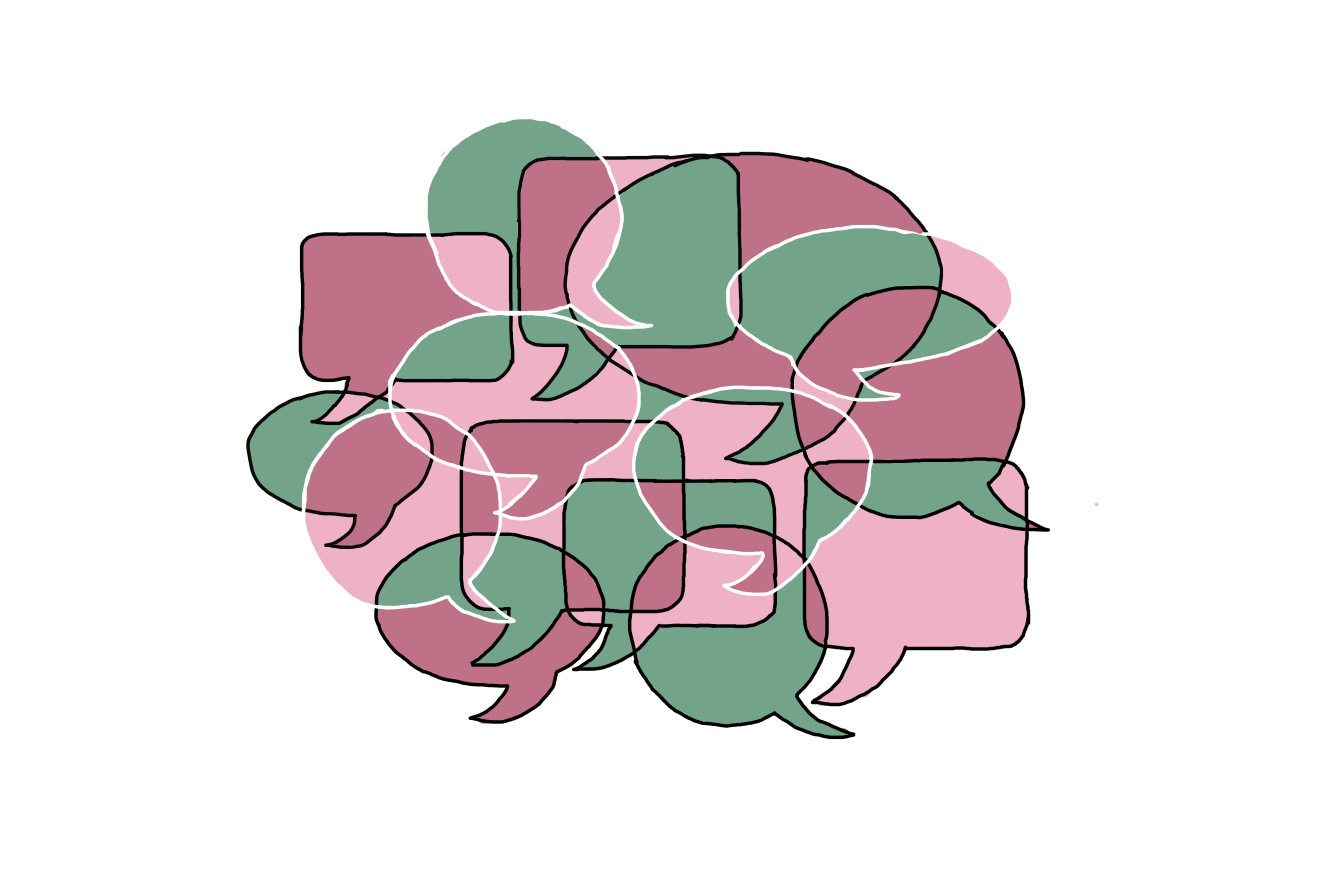
Illustration by Hengjia Liu
This piece was originally published in ‘Memento Mori’, Bossy’s 2021 print edition.
CW: Racism
One of the best things I was told during my term as BIPOC (then Ethnocultural) Department Officer, was by activist and scholar Melz Uwusu: we can be at an institution, and yet not be of the institution. We, as people of colour, can choose to study at universities that are structured like shrines around white colonial legacies—but this space is not made for us. The university is littered with academic, symbolic, and physical reminders of this. And each of us who identify as Black, Indigenous, and/or People of Colour will at one point go through something at these institutions that makes it painfully clear that we are the minority, and that our perspectives will not easily be accepted as legitimate. So often, we are told that incidents of racism within classrooms aren’t enough to warrant action; we are not offered any real pastoral care for dealing with alienation and Otherness; we are met with backlash on every issue that we find important to our community.
One such issue was the presence of a Churchill statue and bust on the south side of the ANU’s Acton campus, which belongs to the Churchill Trust. The existence of physical shrines like this, which are devoid of any acknowledgement of First Nations, Black or People of Colour’s experiences, speaks to why it feels like we cannot be of this institution. It speaks to why it consistently feels like we are underrepresented, not understood, and placed second to the experiences of the (white) majority.
The existence of the BIPOC Department, then, is an effort in representation for those who are impacted by these issues. It was created to provide a unique voice against instances of racism and Othering that people of colour experience on a daily basis. In 2020, the Department collective brought to light the existence of the Churchill statue and bust, and expressed their dissatisfaction with this uncritical representation of history standing on First Nations land. This led to the establishment of a petition for the removal of the statue, and alongside the Indigenous Department, we planned a proposal for what the BIPOC collective would want to see as an outcome to this issue. The petition stated our position within the context of the ANU clearly:
“The ANU must acknowledge that symbols, such as this statue, of archaic and racist systems are harmful to its culture of progress and respect. This icon does not deserve a space on our campus, which is on Ngunnawal and Ngambri land.This petition calls for removal by the ANU of non-critical representations of racist figures, starting with that of Winston Churchill.”
This petition came at a time when the world was talking about the role of statues in society, history, and activism. We had just seen statues like Edward Colston’s in Bristol—which represented a history of oppression and racism—being torn down around the world and replaced with acknowledgements ofthe ongoing struggle of First Nations, Black, and People of Colour. For those in our Department, these actions, tucked inside a larger Black Lives Matter movement, were cause for hope. The idea that ‘winners write history’ is finally being overturned: our stories (as the ‘losers’ of history—the colonised, the murdered, the erased) are being told and told again, and more and more people are listening. Acceptance of non-critical representations of what happened in ‘history’ is dwindling. Statues—which once served as physical symbols of these representations—are no longer accepted as silent, unquestioned shrines to this ‘winner’s history’.
Soon after the Churchill petition went live, three student representatives – two of us from the BIPOC Department, and one from the Indigenous Department—met with the Churchill Trust in a tense and difficult conversation about what the statue represented to us, and why our collectives were offended and asking for change. The meeting reminded me yet again that we always have to work harder for our perspective to be understood; we have to publicly work through our generational trauma and defend our identity alongside our argument. Throughout this interaction, I couldn’t shake the feeling that our being there was tokenistic—that, as usual inside these white institutions, the minorities were being thrown breadcrumbs—and I predicted we would never hear from the Trust again unless we kept knocking on their doors. I followed up at the end of 2020, but was given replies that I was used to: there were other important things that needed their attention.
And so, when we met with the Trust again earlier this year, I was surprised. The steps they had taken made us feel like we had been listened to; like our suggestions had been taken on board, and
that there was an effort to access a more nuanced and critical understanding of history. The statue wasn’t being removed, but a compromise had been met that satisfied all three parties (the Trust, the BIPOC Department, and the Indigenous Department): a critical plaque providing a QR code for people to learn more about the multifaceted history of Winston Churchill would be added to the statue.
This outcome—while not yet representing a full stop to this issue of non-representation and critical nuance when it comes to historical symbols—left me feeling something I had not felt in my whole year as BIPOC Officer: heard, understood, and like I had been met halfway (if not more than that). Most of my work in 2020 (like all Department
Officers) was an uphill battle, a constant battering against the doors of an institution that had made space for me, but not my voice or opinion. Again, the action taken by the Churchill Trust is not the biggest of wins, nor the triumph of anti-racism against colonial legacies, but it’s a small victory that we need to recognise.
This recognition is especially important in light of the palpable and observed feeling that we are not, and our interests are not, protected here. While I might be at university, I do not resonate with much of the representation and history of this academic space. I am not of the institution, and I will continue to be critical of the colonial legacies present here that make this space hostile to us. Still, perhaps this experience of negotiating the representation of history on our campus can provide hope for other avenues to voice our needs as people of colour at this institution. Perhaps we, as First Nations, Black, and People of Colour academics can demand an active consideration of our interests through spaces like the Departments and enforce larger movements towards real, serious inclusion (the whole cake, not just the crumbs). It doesn’t escape me that the onus for change always seems to be set on the minorities, but my hope is that one day, our constant battering against the doors will lead to active listening and response to what matters for us. This will require more dialogue between us and institutions, and I encourage everyone to be critical; to ask for more representation and space. We might not be of this institution based on its history, but we still deserve to be heard, understood, and included as stakeholders in the shaping of its future.


Leave a Reply